
Matériel scientifique
Affichage de 37–39 sur 39 résultats
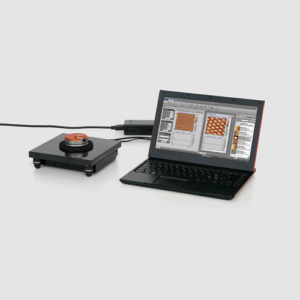
Nanosurf – NaioSTM — STM for nanoeducation
- Atomic resolution in minutes.
- Extremely simple handling and reliable operation.
- Controller and scan head integrated into a single device: just connect USB and power.
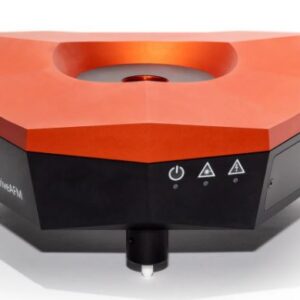
Nanosurf DriveAFM
Le DriveAFM, le nouvel instrument phare de Nanosurf utilise les dernières technologies pour offrir des performances stables et haut de gamme. Il a été conçu pour répondre aux besoins d'une recherche de premier ordre, aujourd'hui et dans le futur.
- CleanDrive : excitation stable dans l'air et le liquide
- Bruit ultra-faible
- Entraînement direct : imagerie haute résolution et grande zone de numérisation
- Système entièrement motorisé : contrôle total via logiciel.
Seifert Instruments – Area-Max BET
zur Schnellbestimmung der spezifischen Oberflächen von Feststoffen (BET) nach DIN 66 132
Verfahren:
Bei der Bestimmung der spezifischen Oberfläche nach der BET-Methode wird mit Hilfe der BET-Gleichung aus der adsorbierten Gasmenge die Menge an Adsorbat berechnet, die auf der Oberfläche des Feststoffes eine aus Stickstoffmolekülen bestehende monomolekulare Schicht bildet.
Aus dieser Fläche und der Einwaage wird die spezifische Oberfläche der Probe in m2/gr berechnet.
Anwendung:
Messungen der spezifischen Oberfläche von hochentwickelten Materialien, wie Nanomaterialien, pharmazeutischen und keramischen Materialien, Metallpulver, Fasern, Pigmente, Mineralien, Zement, Düngemittel sowie viele anderer Feststoffe.
Beschreibung:
Einfache Bedienung da "Ein -Punkt Verfahren"
Kein Vakuum erforderlich
Großer Messbereich ( 0,1 - 1000 m2/g )
Kurze Messzeiten
Automatische Einstellung des Differenzdrucks
Kein Einfluss des Totvolumens durch Verwendung des Differentialmessprinzips
Aufnahme der Adsorptionsisotherme im gesamten BET Breich möglich
Messungen von groben Material möglich
Stickstoff als Messgas
Spezifikation:
Messbereich: 0,1 - 1000 m²/g
Absolute Oberfläche: ca. 2 m²
Einwaage: 0,03 - 30 min (abhängig von Probe)
Analysenzeit:10 - 30 min. (abhängig von Probe)
Analysengas: Stickstoff 99,999 Vol.%
Kühlgas: Stickstoff flüssig
Abmessung (L x B x H): 320 x 250 x 750 mm
Gewicht: 18,7 kg
Stromanschluß: 240 V / 50 H / 14 VA
[media-downloader media_id="4303" texts="Cliquez ici pour télécharger plus d'informations"]

